Maidenhead Synagogue
Sukkot 5786 – 6 & 7 October 2025
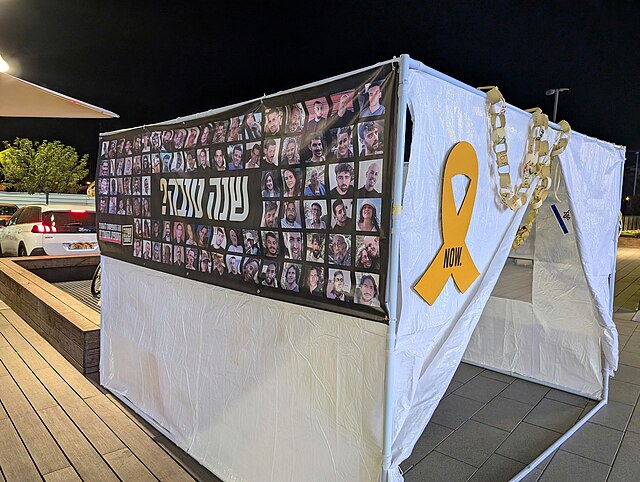
When we stand before a sukkah, what do we see? It’s apparently a simple question. After all, we’re looking at a temporary booth made of wood and branches, decorated perhaps with paper chains and hanging fruit. But as often in our tradition, the simple question opens to profound complexity. The sukkah, I want to suggest, teaches us not just what to see, but how to see, and in doing so, offers us a way of looking at the world itself.
The View from Outside: A Structure That Holds Two Truths
I find it fascinating that, when the rabbis of the Talmud look at a sukkah, they cannot agree on what they’re seeing. In Sukkah 11b, discussing Leviticus 23:43, “That I made the children of Israel dwell in sukkot when I brought them out of the land of Egypt,” they offer two completely different interpretations.
Rabbi Eliezer sees ananei hakavod [clouds of glory], miraculous divine protection that surrounded our ancestors in the wilderness. These weren’t physical structures at all, but rather God’s supernatural presence, shielding the Israelites from the scorching desert sun and the harshness of wandering forty years in the wilderness of Sinai.
Rabbi Akiva sees something entirely different. He sees actual sukkot, real physical booths that our ancestors constructed with their own hands. Wooden frames covered with whatever materials they could find. Human ingenuity and effort in the face of a hostile environment.
One sees the transcendent, the other the earthly. One emphasises what God provided; the other is what we created. And here’s what I consider extraordinary: the Talmud doesn’t resolve this dispute. It simply presents both views and moves on, leaving us with a structure whose very meaning remains uncertain.
We live in an age that values certainty above almost everything else, almost as if we were afraid of complexity. We’ve forgotten how to sit comfortably with questions. Yet here stands the sukkah, refusing to be reduced to a single interpretation. When you look at it, are you seeing clouds of glory or a humble hut? Are you seeing a divine miracle or human construction? The tradition’s answer is yes, both!
The View from Inside: A Roof That Shows the Sky
But there’s another perspective to consider. What do we see when we’re inside the sukkah, looking up, through the roof (s’chach, in Hebrew)?
The roof, the s’chach, cannot be completely solid. There must be gaps through which, tradition tells us, we should be able to see the stars. This is peculiar when you think about it. The entire purpose of a roof, surely, is to shut things out: rain, wind, and the elements. A good roof is solid, watertight, and permanent. But the sukkah’s roof does the opposite. It provides shade while simultaneously revealing what’s beyond it.
We’re commanded to live for a week beneath a roof that’s designed to show us we’re not really roofed at all. When we look up through the s’chach at the night sky, we’re forced to see beyond our immediate shelter. We see vastness. We see infinity. We see a universe that was here long before us and will continue long after us.
This brings us to what might seem like an odd companion for this festival: the book of Kohelet (Ecclesiastes), which we read during Sukkot. The timing appears almost perverse. Sukkot is called zman simchateinu [the season of our joy], our most celebratory festival. Yet we’ve chosen to read alongside it some of the most melancholic poetry in our tradition.
Hevel havalim, amar Kohelet, hevel havalim, hakol havel [Ecclesiastes 1:2]. “Breath of breaths,” says Kohelet, “breath of breaths, all is breath.” Everything is as insubstantial as breath, as fleeting as vapour. One generation goes, another comes, but the earth remains forever. What has been is what will be. There is nothing new under the sun.
The Paradox of Joy in Impermanence
Both the sukkah and Kohelet are asking us to confront something we usually work very hard to avoid: our temporariness, our fragility, and the fact that solid roofs are themselves ultimately as temporary as branches.
This should be devastating. And yet we’re commanded to rejoice. How can we acknowledge our impermanence and simultaneously celebrate?
The answer lies in understanding what Kohelet is actually saying. Hevel doesn’t just mean “vanity” in the sense of worthlessness. The word literally means “breath” or “vapour”; in other words, something light, insubstantial, and fleeting. But breath isn’t nothing. Breath is life itself. The problem isn’t that things are hevel. The problem is when we forget they are, when we try to find permanence in a world made of breath.
Kohelet isn’t counselling despair. It’s counselling realism, and then suggesting that realism is the gateway to joy. Later in the text, Kohelet says: “Go, eat your bread with joy, and drink your wine with a merry heart” [Ecclesiastes 9:7]. Not because life is permanent, but precisely because it isn’t. If everything is fleeting, then this moment matters. The people sitting beside you in a sukkah matter. The taste of a meal you share with friends and family, the sound of these blessings, the feel of the autumn air through those gaps in the roof – all of it matters precisely because it won’t last.
A Different Way of Seeing
The gaps in the s’chach aren’t construction failures. They’re invitations to truth. They remind us that we’re not in control of everything, that we’re part of something infinitely larger than ourselves, that our life is brief and therefore infinitely precious.
This connects back to that unresolved Talmudic debate. Rabbi Eliezer’s view emphasises what we received: God’s protection. Rabbi Akiva’s view emphasises what we built, our own physical shelters. But when we sit in a sukkah, we experience both at once. We sit in something we constructed with our hands, yet we’re also sitting in something that represents trust in divine protection.
The sukkah refuses to let us choose between human agency and divine providence. It demands we hold both. This is the spiritual life in miniature: we act, we build, we create, and simultaneously we trust, we receive, and we acknowledge that our efforts alone are not sufficient.
Dwelling in Uncertainty
There’s a liberation in accepting this multiplicity of meaning. If everything is temporary, then nothing needs to be perfect. If everything is breath, then we can stop trying to capture it and simply breathe. If our roofs have gaps, we can stop pretending we’re in fortresses and acknowledge that we’re always, in some sense, exposed, and that this exposure is not something to fear but something to accept.
This is zman simchateinu. Not the joy that comes from denying reality, but the deeper joy that comes from accepting it. Not the happiness of having captured something forever, but the profound gladness of being fully present to what is, right now, even knowing it will pass.
In a world that demands we pick sides, draw lines, and declare certainties, the sukkah offers a different way. It says: you can believe in human effort and divine providence. You can see the natural and the miraculous. You can acknowledge fragility and trust in protection.
Conclusion: The Wisdom of the Sukkah
So, when we look at the sukkah, what do we see? We see a structure that holds contradictions without resolving them. We see walls that shelter and a roof that reveals. We see something we built that commemorates both human ingenuity and divine protection. We see a temporary dwelling that teaches permanent truths about impermanence itself.
The sukkah invites us to dwell not just in a temporary booth, but in uncertainty itself. It asks us to be comfortable with multiple meanings, with unresolved tensions, with questions that don’t have neat answers. And it suggests that this capacity for paradox isn’t a failure of understanding but a deeper kind of wisdom.
When we recite the blessing leshev ba-Sukkah, which means “to dwell in the sukkah,” we are acknowledging and celebrating our ability to embrace paradox. We’re blessing the wisdom that knows how to look through gaps in the roof and see infinity. We’re blessing the courage it takes to sit in something fragile and call it shelter, to acknowledge that everything is hevel and still choose to rejoice.
This is what the sukkah teaches us about looking at the world: that reality is richer than any single perspective can capture, that temporariness doesn’t diminish meaning but intensifies it, and that the deepest joy comes not from solid roofs but from learning to see the stars through the gaps.