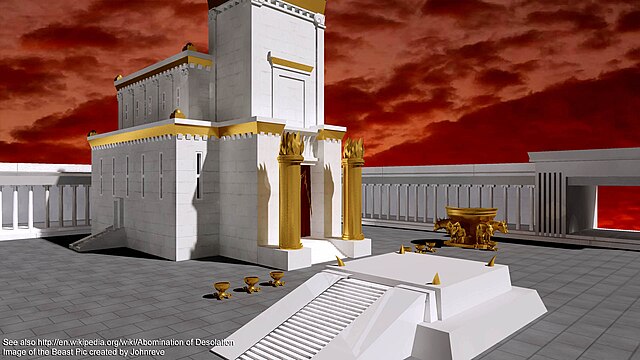
Parashat Ki Tavo opens with one of the Torah’s most evocative rituals: the bringing of the first fruits — ביכורים [bikkurim]. A farmer takes the first yield, ascends to the sanctuary, places a basket before the priest, and speaks a fixed declaration that binds present gratitude to ancestral memory.
“A wandering Aramean was my ancestor; he went down to Egypt and lived there as a stranger, few in number… The Eternal brought us out of Egypt with a strong hand… and brought us to this place and gave us this land, a land flowing with milk and honey.” (Deuteronomy 26:5, 8–9).
This ceremony is not simply an agricultural rite. It is a social and theological act that transforms a private harvest into a public story. The individual says “my” but steps into “our”. The ritual places a single life within the common narrative of liberation and covenant, and by extension, when we recite these verses during the Seder of Pesach, it becomes our story.
Rituals carry a paradox: they repeat the same words and gestures, yet they allow each generation to bring its own life into them. The Mishnah records that, at first, only those who could recite the declaration did so, while others were prompted; but when some refrained from bringing the first fruits because they feared they wouldn’t be able to say these words, the sages instituted that everyone, fluent or not, would be led phrase by phrase by the priest so that none would be excluded (Mishnah Bikkurim 3:6).
Rituals create community because they act as a language with words and actions that transcend time and space. Anthropologist Victor Turner described how shared rites generate communitas, an intensified sense of belonging that can cross ordinary social divisions.
And rituals can also be soothing, transformative, but their very repetition, in time when the ground seems to shift beneath our feet. In seasons of anxiety or grief, this power is not theoretical. Worry isolates; sorrow narrows our world. Ritual draws us out and sets us inside a rhythm larger than ourselves.
In a time of deep worry, ritual gives form to what feels blurry and formless. Lighting Shabbat candles asserts that there will be light. Standing together for the Amidah helps those whose hearts are heavy to rise with the community. Saying the Mourner’s Kaddish gives words when our own fail. As a mediaeval saying (often cited by Abraham Joshua Heschel) teaches: “Prayer without כוונה [kavanah] is like a body without a soul.” Heschel reflects on this powerful lesson in his Man’s Quest for God (1954), emphasising that practice is meant to transform the self, not to work magic. We do “do” rituals because we believe in a magical power or because we are merely commanded to. We “do” rituals because of their transformative power on our inner selves.
Ritual also relieves us of the pressure to improvise meaning at precisely the moment we may have least capacity, when the world around us seems too scary. Ki Tavo asks the farmer to speak gratitude aloud. Gratitude can feel forced in anxious times, yet when voiced regularly, it becomes a gentle spiritual discipline that shifts perspective; amid fear, there are still first fruits to notice and gifts to acknowledge.
Rabbi Jonathan Sacks put it simply: “Rituals are how civilisations preserve their memory, keeping faith with those who came before us and passing on their legacy to the future.” In other words, ritual is the choreography by which hope is practised, not an escape from reality, but a way of facing it together.
Kavanah (Intention) for the Community
And before I conclude, I would like to offer you a little Kavanah, a little intention to take back home with you. As we gather this Shabbat, let us bring the “first fruits” of our hearts, our gratitude, our sorrow, and our longing, and place them before the Eternal, like this basket, as an offering, as an act of gratitude, but also as a plea for support. Let us remember that we stand inside a story greater than the fears of this moment.
יהי רצון מלפניך [Yehi ratzon milfanekha]:May our lighting, our singing, and our shared silences be like a basket of first fruits, a quiet pledge that we are still here, still blessing, still walking toward a future flowing with milk and honey.