
Someone asked me recently, “What’s the purpose of Shavuot?”
“Cheesecake” was my immediate answer. There could be a way to teach Jewish holidays by the main food consumed: Pesach, when we avoid chametz; Chanukkah, when we eat latkes and doughnuts; Shavuot and its famous cheesecake; Rosh Hashanah, with apples and honey; and Yom Kippur, when we abstain from eating and drinking altogether. Food is a great unifier and a mark of identity.
The truth is, Shavuot is less observed than Rosh Hashanah, Yom Kippur, or Pesach. In the overall Jewish narrative, our ancestors became a people during the Exodus and received a structure and framework only fifty days later on Shavuot (Hebrew for “weeks”—the seven weeks between both festivals). According to the Torah, God revealed what was expected from us in a Hollywood-style narrative, with thunder and loud noises, with reverence and awe.
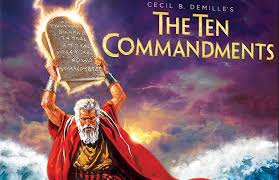
The fundamental teaching of Shavuot is that Torah wasn’t given to isolated individuals but to all of us, standing together. A beautiful Midrash teaches that all Jewish souls were present at Sinai – those of the people who lived that day, those yet to be born in the future, and the proselytes who would join our community along the way (Shemot Rabbah 28:6).
Shavuot invites us to contemplate: what is our community, and what is our purpose? We have received a law, but it’s open to endless debates and interpretations. But more importantly, we have received a sense of common purpose.
Recently, I’ve found myself drawn to the concept of the “Amen Effect,” as described in a book of the same name by Rabbi Sharon Brous. In essence, Rabbi Sharon explains that when we affirm each other’s experiences and see each other in truth, something powerful happens— connection. She writes, “When I hear your story and your struggles and respond with ‘amen’, I am saying, ‘I see you. Your experience matters. We both feel strengthened in some way. This “Amen Effect” manifests throughout our community – in conversations after services, in study groups, and in how we show up for each other during both celebrations and challenges. Another great colleague of mine, Rabbi Laura Janner-Klausner, told us once, “If we show up only at simches (happy occasions), we are a mere social club.”
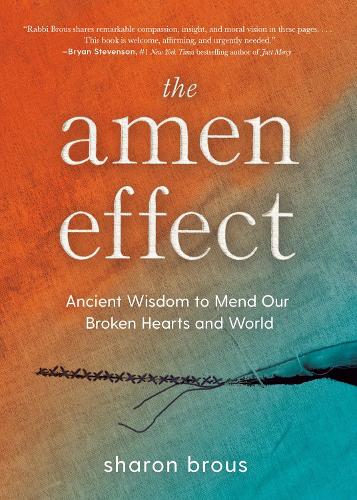
Rabbi Brous drew her inspiration from a passage in the Mishnah (Middot 2:2), which describes an ancient ritual when the Temple was still standing. During the pilgrimage festivals (Pesach, Sukkot and Shavuot), people would enter the courtyard from the south and walk clockwise. However, mourners would circle in the opposite direction. The community would ask the mourners, “What happened to you?” and they might share their pain: “My mother died,” or “I found a lump.” The community would then respond, “May God comfort you,” or “May the community wrap you in its embrace.”
Sinai revealed that we have rules and values to live by, and most importantly, we have each other to face life’s challenges. We recognise the face of God in others, and when we encounter someone who is mourning, we make an effort to show up and support them. We do this because it is the right thing to do. And because one day we will be the ones circling anticlockwise, welcoming in our turn the love and support of our community.
The question of Shavuot’s relevance arose one Sunday morning during the Forum, a safe space for difficult conversations facilitated by one of our fantastic members. People come with different views, yet they listen to each other respectfully. We live in a time of heightened tensions, strong emotions, and significant challenges. I am proud to be the rabbi of a community that has created within it a space where difficult conversations can happen in a menschlich way. There is no way to build sacred communities other than to create and open these safe and sacred spaces, where we come together, listen to each other with respect, and recognise in each other the face of God. Standing for that is neither a sign of weakness nor naivety. Being vulnerable with each other and accepting that we are not at the centre of everything is a sign of maturity and strength.
Often, people mistake brutal force for strength. You can win by crushing your opponent, but you will have lost. Shavuot is an important reminder of how to build sacred communities when, altogether, we lift our eyes to the mountain, where the help and support come from (Psalm 121:1).
Chag Shavuot Sameach.
Rabbi Rene