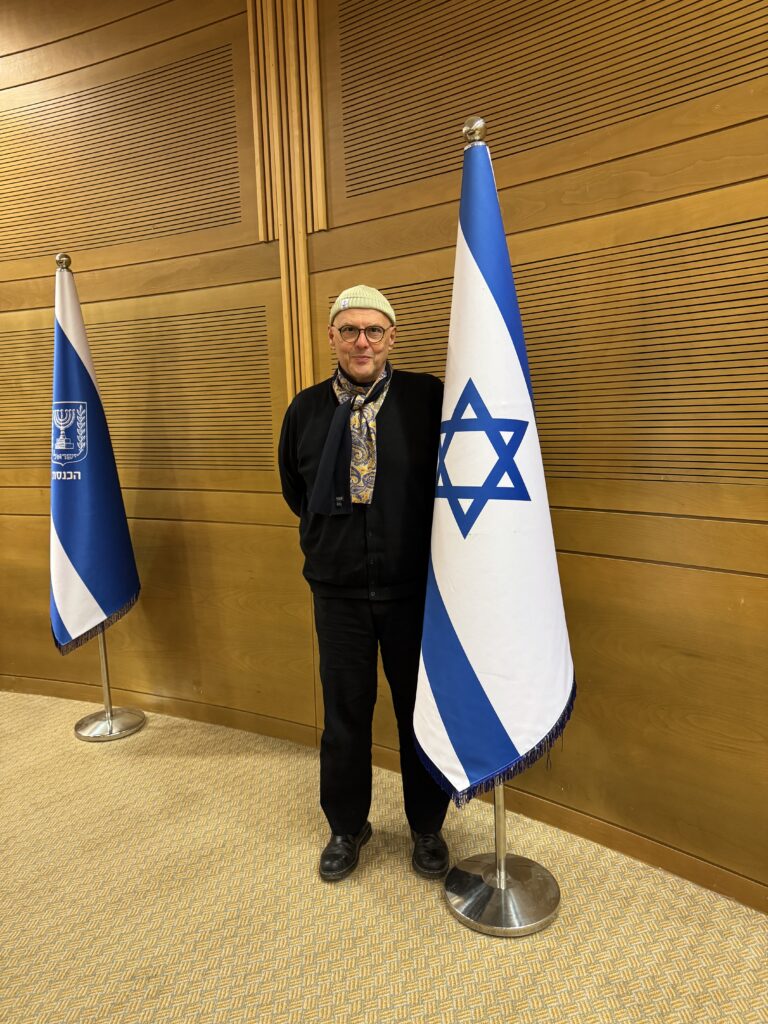
In July 2014, I received my Semikha (Rabbinic Ordination) from the fantastic Rabbi Sheila Shulman, z”l. It’s been a bit over 10 years now, and I have to say, things have taken a turn I wasn’t expecting. My original plan was to return to France and work for the Jewish community in Lyon. But, as the Yiddish proverb says, “we make plans and God laughs”.
דער מענטש טראַכט און גאָט לאַכט
From 2014 to 2016, I divided my professional life between France and the United Kingdom, journeying regularly from Lyon to London on the Eurostar. These train journeys gave me time to reflect as I navigated between two worlds. Eventually, I decided to make Britain my permanent home.
My rabbinical journey in the UK began with a part-time position at Finchley Progressive Synagogue, where I had the privilege of working alongside Rabbi Rebecca Birk, who quickly became not just a colleague but a dear friend. In 2015, I joined the rabbinic team at the Liberal Jewish Synagogue in St John’s Wood under the leadership of Rabbi Alexandra Wright. Those two years at the LJS offered invaluable insights into both the joys and challenges of serving as part of a rabbinic team in one of Britain’s largest synagogues.
In 2017, I embraced my first solo position at Kingston Liberal Synagogue, where I served until summer 2024. These ten years immersed in the Liberal movement have profoundly shaped my theological perspective and rabbinical identity. I have come to understand myself as a progressive/liberal/Reform rabbi who sees Jewish tradition as a living, evolving body of wisdom that remains open to creativity and meaningful change.
At the heart of my rabbinical vision is a commitment to community building. I strive to create safe, non-judgemental spaces where Jews can explore and celebrate their Jewishness through worship, study, and communal gatherings. In our complex modern world, I am increasingly convinced that such safe havens are essential and that this remains the fundamental purpose of community.
And then, Brexit happened. The two-year campaign leading to the June 2016 referendum marked a profound shift in our political discourse. We witnessed the proliferation of half-truths and outright falsehoods, conspiracy theories gaining traction, and the emergence of populism’s ugliest face alongside the most divisive forms of nationalism. The “others”—EU citizens and non-British residents—became convenient scapegoats in an increasingly polarised public conversation.
What troubled me deeply was watching politicians who could disseminate untruths without the slightest hesitation and perhaps more concerning still, an electorate that seemed willing—even eager—to embrace this path, convinced it would lead to a better life. The referendum revealed fractures in British society that had long been developing beneath the surface, challenging my understanding of the community I had chosen to call home.
This political transformation occurred precisely as I was setting roots in Britain, forcing me to reconsider whether I wanted to remain or leave— almost a personal Brexit. I decided to stay, as my life was already here, and in 2021, I became a British citizen.
I was born and raised in Alsace, one of the hearts of the European construction. We were proud of the EU’s accomplishments and visited its institutions as schoolchildren in Strasbourg. I believed that this European construction marked a significant milestone in history.
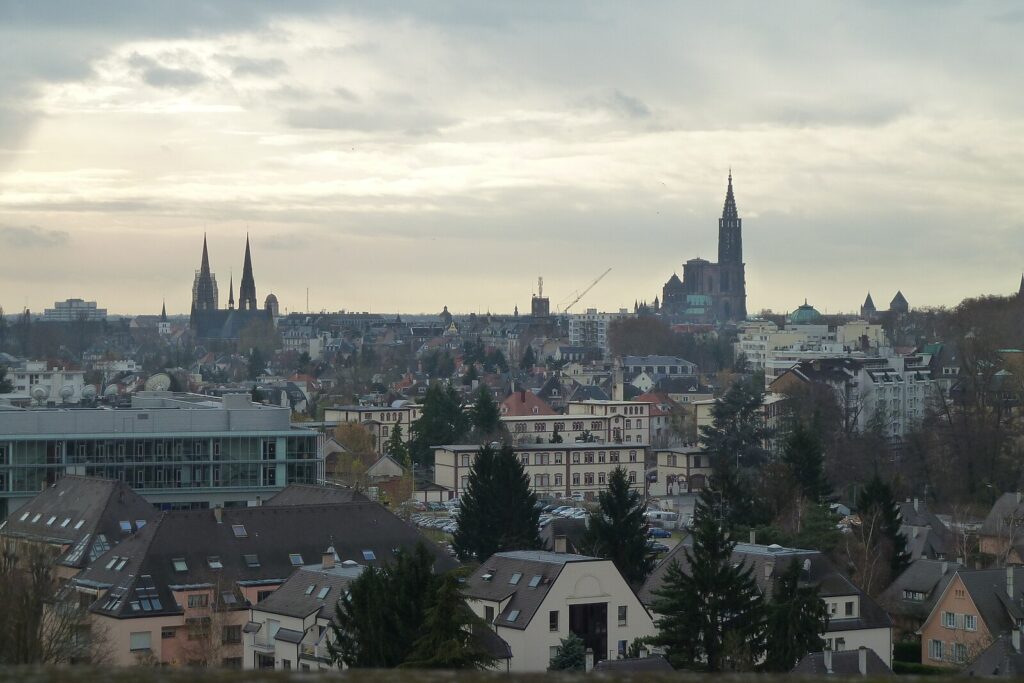
Strasbourg is viewed from the roof of the European Parliament.

But of course, the perspective is different. Here, in Britain, we are at the northwest edge of Europe, with an eye overseas. In Alsace, I was at the heart of Europe. Brexit must also be seen in the larger context of the rise of nationalism and populism, and many countries in Europe now have strong parties that are inward-looking, anti-Europe, and promoting more conservative views on society and identity.
And then, October, 7th happened. On that Simchat Torah—a day when Jews worldwide celebrate completing the yearly Torah reading cycle and beginning anew—our celebration turned to mourning. 1,200 people were killed, including 440 young people attending a music festival. They took over 250 people hostage, some of whom remain captive in Gaza today. Communities were shattered, with large portions of the population displaced across the country; many are still unable to return home.
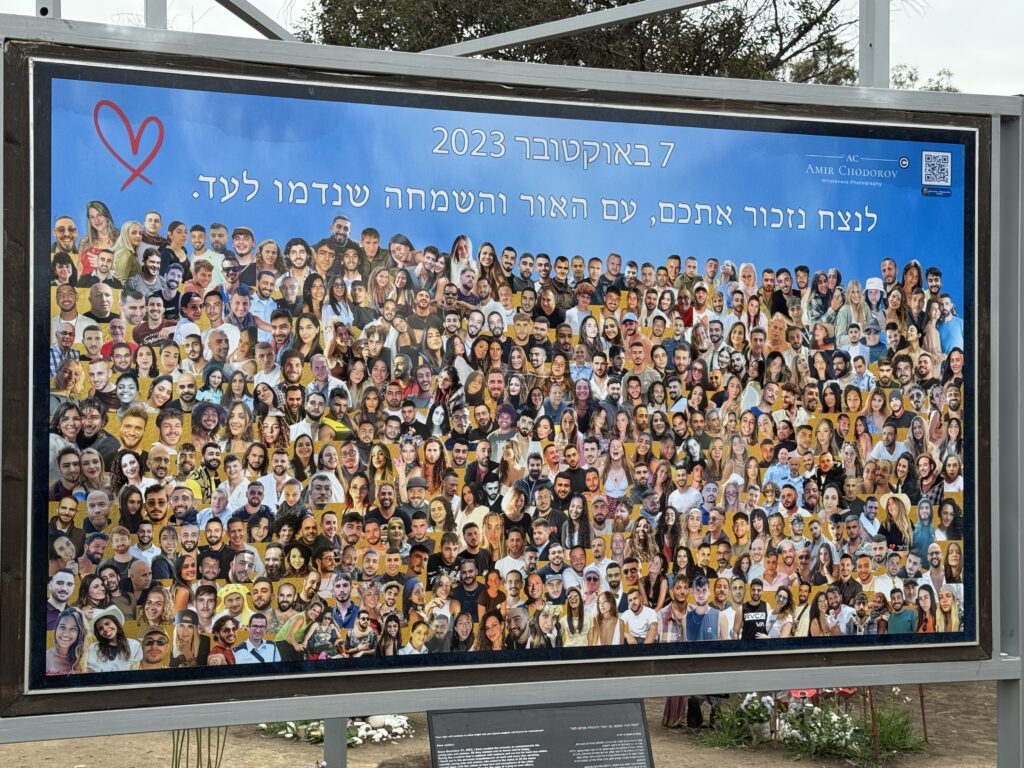
During my visit to Israel in February 2025, I was deeply troubled by the trauma running deep in the fabric of society. Walking through places once vibrant with life, I saw a nation still processing its collective grief. What adds to this tragedy is the surge of anti-Israel sentiment worldwide, creating painful challenges for Jewish communities in the diaspora struggling to navigate this complex reality.
As a rabbi, I find myself holding space for both the profound grief of those directly affected and the difficult questions raised by the ongoing conflict. Our communities are divided. Emotions are very high; people are deeply wounded. There is definitely a “before” and an “after” October 7th. Holding the different parts of the community together has been incredibly hard. I have to leave aside my personal views and feelings because whatever I say, I will upset someone. Usually, it’s fine. There is a saying that if a rabbi doesn’t upset half of his congregation, he hasn’t done a good job. But in this particular situation, that is impossible. As one of my students told me once, “I am sure you haven’t imagined yourself in this position in your rabbinate.” Certainly not. I didn’t become a rabbi for an easy life. But this experience is pretty overwhelming. I am tired.

This sentiment is shared by many Rabbis: how to hold diverse communities in a time when the public discourse is so antagonistic, when it seems impossible to find a common narrative, when people are wounded and grieving, licking their wounds?
One of my American colleagues wrote a prayer, which he shared on Facebook. I return to it when I feel overwhelmed, and it helps.
A Prayer for When It’s All Too Much
by Rabbi Paul Kipnes
I am spent.
Worn thin like the edge of my tallit,
frayed from too many pulls
on body, heart, and soul.
You call me to be present—
to hold, to heal, to help.
But today, I feel hollowed out.
The river of need overflows its banks,
and I—once the steady shoreline—
am crumbling.
My mind races—
with tasks to complete,
tears to comfort,
worries about new life
and old responsibilities.
Joy and dread
dance too close together.
O Holy One, slow my spiraling.
Let me breathe in Your comfort
like Shabbat’s first deep inhale.
Let me see sparks of goodness
even in the undone.
Let me forgive myself
for not holding everyone all at once.
Hold me, O God,
as I try to hold them.
Remind me that I am not You—
and do not need to be.
That I am enough,
even in my tiredness.
May I make room for the new baby’s cry,
and the wedding’s wonder,
without guilt for the joy they bring.
And when I cannot carry another’s pain,
may I trust You to do the holding.
Amen.