In 1868, a group known as the American Free Religious Association, united by their opposition to organised religion and their embrace of a universal, rational theology, published their inaugural proceedings. Within these records, a powerful observation was made by the Association’s secretary, William J. Potter, who noted that the world was undergoing “great religious changes”.
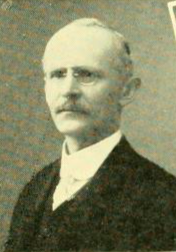
William J. Potter, 1907.

Potter’s observations extended beyond Judaism, recognising similar progressive movements within Islam, in India, and in China, signalling a global shift towards reform and a rejection of the old ways. This era was marked by a profound faith in progress, fuelled by the rise of science and a strong belief in a future that would eclipse the past. Progress was perceived as a linear force, propelling society towards enlightenment.
Potter highlighted the emergence of a “young and progressive Judaism”, one that was actively engaging with the world, shedding the practices and beliefs that had historically isolated Jewish communities. This new movement, he suggested, was looking towards the advancement of Truth itself as the Messiah, poised to redeem humankind.
In this context, “Progressive” Judaism signified a departure from past traditions that had created barriers between Jews and the wider world. It represented a desire to join forces with like-minded individuals globally, who were committed to dispelling the “darkness of pre-modernity”. The mid-19th century in the Western world largely witnessed the triumph of modernity, a direct outcome of the Enlightenment, the Age of Reason, and the ascendancy of liberal ideals that liberated individuals from political, economic, and religious constraints.
Therefore, the term “progressive”, when applied to Judaism, implied a forward-thinking faith, a Judaism embracing progress in contrast to a Judaism rooted in the past, particularism, and supernaturalism. It was, in essence, a modern Judaism tailored for enlightened and educated Jews.
Rabbi Isaac Mayer Wise, a key figure in the establishment of Reform Judaism in the United States, articulated this concept in a compelling essay published in 1871:
“Change, universal and perpetual, is the law of laws in this universe. Still, there is an element of stability: the fact of mutation itself; the law of change changes not. This law lies in the harmony of the spheres, the mystery of truth in nature’s variegation, the manifestation of the wisdom of the Immutable Deity… Wisdom, boundless and ineffable, and the revelations of Deity lie in this law of laws, ’which God hath created to do.” Therefore, Reformed Judaism acknowledges no necessary stability of the form but also no change of the principle. All forms change, adapting themselves to new conditions, and all changes proceed from the same principle, which is not subject to change… It must be understood that the term “Reformed” in connection with “Judaism” does not imply restoration to an older form; it is intended to convey the idea of putting into a new and improved form and condition.
Judaism, from this standpoint admits no retrogression, and maintains that all form which the principle has developed and crystallized, were necessarily beneficial for each respective time and locality… As civilization progresses, the principle of Judaism will always develop new forms in correspondence with every progressive state of the intelligence and consciousness, until the great day when one shepherd and one flock will unite the human family in truth, justice, and love… The divine institutions of the past are not obligatory on the present generation or on coming ages, since the conditions which rendered them necessary, desirable, and beneficial have been radically changed. Therefore, Progressive Judaism would be a better designation than Reformed Judaism.
But on account of common usage, the latter term has been adopted as the caption of this essay and should be understood in this spirit alone.”
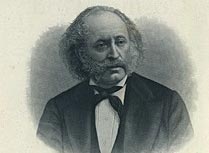
Rabbi Isaac Mayer Wise (1817 – 1900).

The concept of “Progressive Revelation” finds its roots in the philosophy of Hermann Cohen (1842-1918), who, in his influential work The Religion of Reason, explained that Revelation, much like Creation, is an ongoing and continuous process, initiated at Sinai and extending into the present day.
Thus, the term “progressive” has acquired theological significance, reflecting a deep understanding that Judaism, like the universe itself, is inherently dynamic and evolving. In Jewish terms, Revelation, as depicted in the Torah—from personal revelations to biblical ancestors in Genesis to the collective revelation at Mount Sinai in Exodus—has persisted throughout Jewish history and continues today. Change and evolution have been constant features of Judaism. As Fania Oz-Salzberger and Amos Oz eloquently stated in their book Jews and Words (2014), “Ours is not a bloodline, but a textline.”
Since the completion of the Torah (in its strict sense, i.e., the first five books of the Bible, around the 5th to 4th century B.C.E.), Jews have actively engaged in discussion, debate, and commentary on its five books, which form the core of the TaNaKh, the Hebrew Scriptures. This demonstrates that Jews have consistently sought guidance and meaning relevant to their time, expressed in language accessible to their generation. Judaism, in this sense, has always been progressive.
In contemporary non-Orthodox circles, “progressive” has become an umbrella term encompassing movements that identify as “liberal” or “reform”. Even Reconstructionist Judaism, while not formally affiliated with the World Union for Progressive Judaism, is largely considered a progressive movement. These movements share several core principles.
Traditional Judaism allows no compromise regarding Halakhah (Jewish law). While practices may vary based on a community’s ethnic or geographical location, these variations are codified within major legal codes, most notably the Shulkhan Arukh, initially published by Rabbi Joseph Caro in 1565 (reflecting Sephardic practices) and later annotated by Rabbi Moshe Isserles in the following century to incorporate Ashkenazi customs. In contrast, the progressive world lacks such a definitive legal code, driven by a concern that it could ossify Jewish practice and hinder its natural fluidity. Some scholars even argue that Rabbinic Judaism is now post-Halakhic or non-Halakhic. The author of this post is not ready to go that far. Rabbinic Judaism being by nature progressive, the modern forms of Judaism – or Rabbinic Judaism – are congruent with its very nature. There is no original norm that constitutes the measure of everything, to which one has to refer in order to assess one’s legitimacy.

Postcard portrait of Rabbi Joseph Karo by Meir Kunstadt, early 1900s.

Regardless, progressive Jews emphasise “informed choice”, making their own decisions after careful consideration and selecting practices that resonate with them. However, this approach carries a potential risk: an impoverished practice resulting from insufficient study or a lack of interest in Talmud Torah (Jewish learning) within progressive communities.
The concept of Mitzvot (divine commandments) also distinguishes progressive Judaism from other denominations. As early as the 17th century, Baruch Spinoza differentiated between sacramental mitzvot, the ritual practices that define Jewish life, and ethical mitzvot, the ethical principles guiding individuals in their conduct. This tension between particularism (Jewish distinctiveness) and universalism (shared humanity) is addressed in Rabbi Elli Tikvah Sarah‘s compelling “three commitments” (2013), which seek to balance these elements: embracing Jewish teaching while engaging with broader world knowledge, sustaining the Jewish community while striving to repair the world, and affirming the oneness of God.
Ultimately, progressive Jews believe it is not only permissible but also desirable to explore the rich tapestry of Jewish tradition, seeking practices and values that shape a meaningful understanding of what it means to be a progressive Jew.
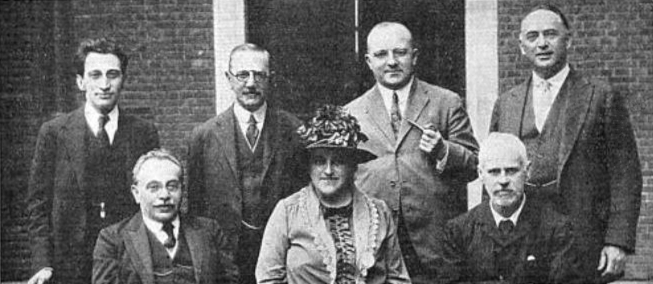
First meeting of the World Union for Progressive Judaism, London, 1926.