
The Power of Resilience: Finding Harmony in Broken Strings
Maidenhead Synagogue, Erev Rosh Hashanah 5785, 2 October 2024.
I want to begin with a story, perhaps more urban myth than historical fact, but one brimming with truth. It’s a story about the legendary violinist Itzhak Perlman, as recounted by Alan Morinis, a master of Mussar, the Jewish system of ethics and moral philosophy.
One evening, Perlman was in New York for a concert. Having been stricken with polio as a child, simply getting onto the stage was a remarkable feat. He wore braces on both legs and walked with the aid of two crutches. With visible effort, Perlman made his way slowly across the stage to his chair. He sat down, signalled the conductor to begin, and started to play.
But then, just a few bars into the piece, one of the violin strings snapped, the sound echoing like a gunshot. Perlman was near the beginning; it would have been understandable for him to stop, replace the string, and start again.
However, he did not. He paused for a moment, then told the conductor to continue from where they had left off. Perlman now had only three strings to play his solo. He found some of the missing notes on the remaining strings, creatively rearranging the music in his mind as he played. With passion and artistry, he spontaneously recreated the symphony until the very end.
When he finally rested his bow, the audience was held in stunned silence. And then, they rose to their feet, erupting in wild applause. They had just witnessed an extraordinary display of human skill and ingenuity.
Perlman raised his bow, asking for quiet. “You know,” he said, “sometimes it is the artist’s task to find out how much beautiful music you can still make with what you have left.”
Was he speaking about his music or his physical challenges? Isn’t this true for all of us, not just artists? Do we strive to create beauty with what we have, despite our imperfections?
In Hebrew, this is called hakarat ha-tov, acknowledging and recognising the good in our lives.
A Talmudic story illustrates this concept:
Ben Zoma said, “What does a good guest say? ‘How much trouble my host has gone through for me! The meat, the wine, the cakes – all this effort for me.’ But an inconsiderate guest says, ‘What trouble has my host taken? I ate a piece of bread, a sliver of meat, and had a single cup of wine. All this trouble was only for his family.’” (Berakhot 58a).

Purim, Safed, 19th century.

Both guests experienced the same meal, yet their responses differed drastically. One recognised the host’s effort to honour them, while the other complained, feeling it wasn’t enough.
Are we able to see the good in our circumstances, or do we fixate on the negative? Can we be grateful for what we have, or do we dwell on what we lack? And in times like these, when challenges and threats seem overwhelming, how can we maintain positivity and see the good amidst the prevalence of evil?
Tonight marks the beginning of the Yamim Noraim, the Days of Awe. This ten-day period, starting with Rosh Hashanah and culminating in Yom Kippur, is a time for reflection, for cheshbon ha-nefesh, a soul-searching. We ask ourselves: are we making the most of our lives, or are we wasting them on trivial disputes and unnecessary worries? How are we resisting the negativity that constantly bombards us from social media and news outlets?
These ten days are primarily for personal, introspective self-assessment. However, we cannot ignore the turbulent times we live in. There is much anxiety, and some of our challenges feel so immense that we feel powerless.
Our world has fundamentally changed since October 7th of last year. We are still grappling with the extent of this change, but one thing is clear: there is a distinct “before” and “after”. The situation is so volatile that predicting the outcome of the ongoing conflict is impossible. The confidence of Israelis in their state’s ability to protect them has been shaken by the devastating attacks, the worst against Jews since the Holocaust, evoking painful memories of the past. The suffering, deaths, and destruction are immense, and the future remains uncertain.
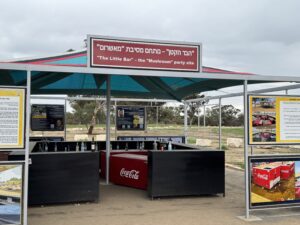
An Israeli friend once told me that the war depicted in Western media is far removed from the reality experienced in Israel. Israelis are traumatised yet resilient. Jews in the diaspora feel anger and powerlessness, witnessing a resurgence of antisemitism. Communities and even families are divided over the complexities of the situation. As a rabbi, I have found it particularly challenging to support my community this year. Emotions are heightened, hindering constructive dialogue, a common casualty of war where reason often yields to violence. Many questions remain unanswered: When will it end? Is a two-state solution still possible? Is meaningful communication even possible anymore? Extreme voices dominate the discourse. Where are the voices of reason, empathy, and humanity? War teaches us that situations often worsen before they improve.
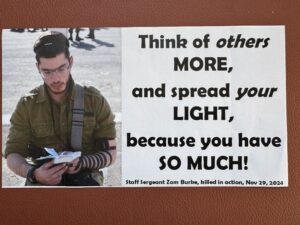
Where do we stand now?
But in the meantime, and in the long term, what do the High Holy Days teach us about facing hardship?
Perhaps the answer lies in considering our news sources. Often, media outlets create a sense of urgency and impending disaster. Staying informed is crucial for a healthy democracy, and good information is essential. However, our newsfeeds don’t always provide a balanced view of the world. Media outlets often exaggerate negative news to attract attention. They exploit our negativity bias, our tendency to focus on negative stories more than positive ones. They capitalise on our weakness for bad news, often neglecting positive stories to disproportionately focus on the negative. Consequently, consuming news can lead to anxiety and unhappiness, creating the impression that misery is everywhere.
We can counter media manipulation by recognising their bias, limiting our time with media and social media, and carefully selecting balanced news sources. I am not minimising the seriousness of the challenges we face. They are indeed significant and can have lasting consequences. My point is that our outlook, our ability to resist widespread anxiety, and our capacity to maintain perspective are crucial.
Ancient wisdom reminds us: Gam zeh ya’avor – this too shall pass. If we dwell excessively on the past, we risk becoming trapped in old traumas or the illusion that life was once better. While the past has shaped who we are and our present circumstances, it cannot be changed. Focussing on the future can lead to anxiety, and pursuing misguided goals may manifest our deepest fears. We sometimes forget that our future hinges on our present decisions and that we always have the power to change course. Humanity has overcome numerous challenges, and we must remain confident that we will ultimately make sound choices. Let us remember that the instinct for survival is a powerful force in all living beings. The future is unwritten; the past is immutable. Positive change begins now, dependent solely on us. We cannot rely on others to bring it about for us. Responsibility for our actions and our future is a central message of the High Holy Days.
The story of Itzhak Perlman, creating beautiful music with a broken violin, demonstrates that even in adversity, we can craft beauty in our lives. Hakarat Ha-tov, acknowledging the good in the world and our lives, is not a naive disregard of our present challenges. It is a mindset that fosters resilience, enabling us to navigate difficult situations with grace, resist negativity, embrace hope, and transform bad into good.
As we begin this Days of Awe, let us remember that change is always possible, starting with our individual perspective. It demands effort, is met with resistance, but must be addressed with determination. As Rabbi Hillel said, “If I am not for myself, who will be for me? But if I am only for myself, who am I? And, if not now, when?” (Ethics of the Fathers, 1:14) That is, I believe, the call of the shofar blasts that we will hear during these days: wake up, and do not give in to despair.
