A meditation on choices and why sometimes we resist changes.
Most of us know the experience of standing in front of a door we have not yet opened. It is a job that stopped making sense to us years ago, a habit we have outgrown, a place we know too well, and a conversation we keep meaning to have. We can see the door clearly. We know, more or less, what is on the other side. And still we stay, sometimes for years, because crossing would ask us to become someone we have not yet been, and that prospect is harder than almost anything we might meet on the far side.
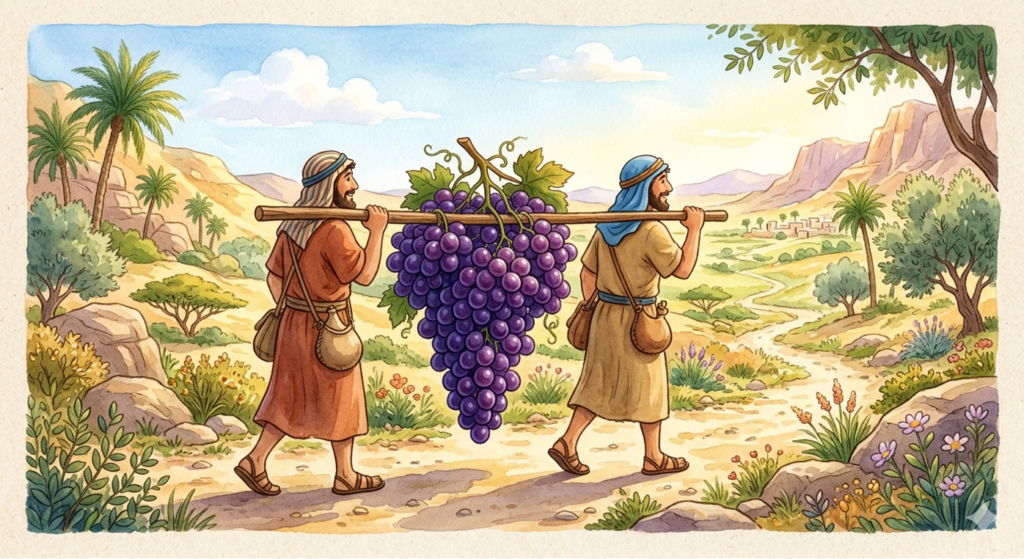
I have been reflecting on thresholds during Shabbat Sh’lach Lecha (13 June ’26) because the parashah places a whole people in front of a door and lets us watch what they do with it. The Israelites have travelled a long time, two years out of Egypt, through the sea and the wilderness, and now the land they were promised is finally in front of them, close enough to enter. Moses sends twelve scouts ahead to look. They go up for forty days, and they come back, and the threshold of the whole journey comes down to what they say.
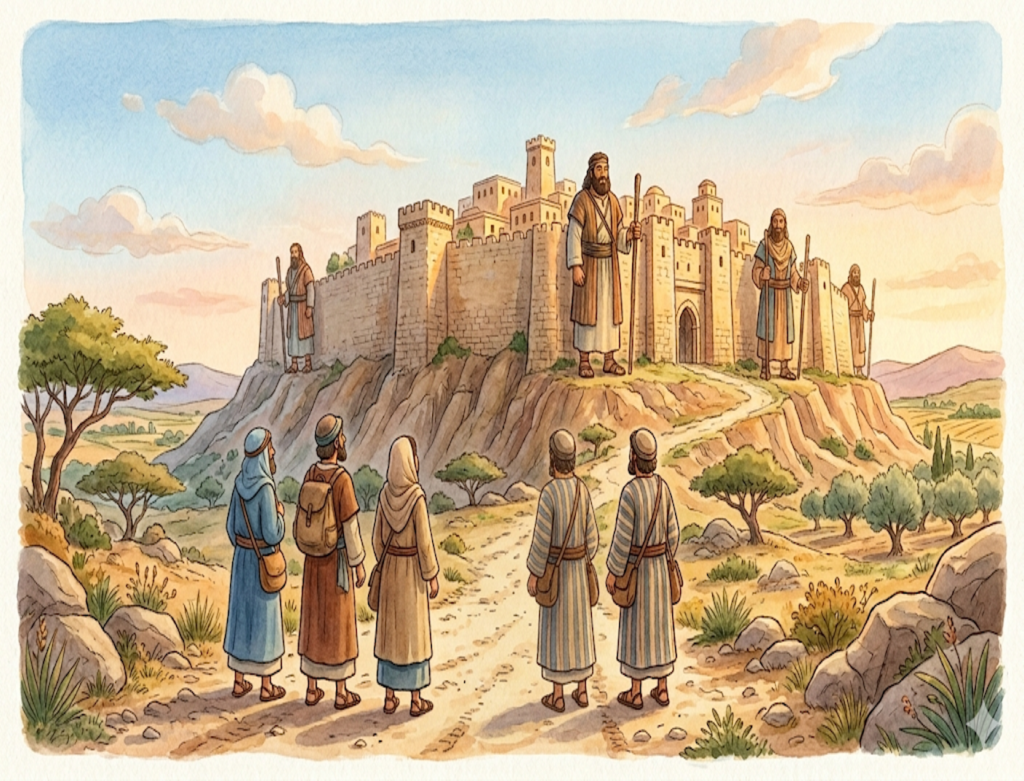
Ten of them say the land is good, but we cannot go up. Two of them, Caleb and Joshua, say the land is good and we are well able. They walked the same hills and saw the same walled cities and the same tall people living in them. One country, one report of the facts, and two conclusions. The difference was never in the land. It was in what each of them carried as they looked.
It is too easy to call the ten cowards and move on. They were the leaders of their tribes, chosen for the task, and they did not lie. The cities really were walled, and the people really were tall. Every fact in their report was true. That is what makes the passage so honest. Their failure was not in how they saw. They saw clearly. Their failure was in what they did with what they saw, and here the parashah shows the first of two ways a people refuses a threshold.
The first way is fear, and specifically what fear does when it is spoken in a crowd. The text says the whole community wept that night. One report was brought back frightened, and by morning the fear had moved through the entire camp. The ten did not intend to harm their people. They came back afraid and let the fear speak before they had weighed it, and fear spoken among others does not stay still. It finds the worry already sitting in every heart and gives it permission. By the end of the night a generation had decided it could not go forward, and the deciding was done in the dark, before anyone had slept on it. The danger was never the giants themselves. The giants were always going to be there. The danger was a community that let its fear harden into a verdict before it had tested whether the fear was true.
The second way of refusing is quieter, and in some ways harder to see, because it does not look like fear at all. It looks like good sense, even like peace. To understand it, we have to ask what the people were really afraid of, because it was not death; they had faced death at the sea and survived it. They were afraid of the land, and to see why, we have to ask what the land was and what the wilderness had been.
Think about the wilderness they were leaving. For two years they had been fed without sowing a seed. The manna fell every morning, and they had only to gather it. Water came from rock. A cloud went before them by day, so they never had to decide which way to walk. Everything was provided, and nothing was asked of them. The wilderness was the safest place these people had ever been. It was a kind of childhood: every need met, every danger handled by someone larger than themselves.
The land is the end of that childhood. In the land the manna stops. You sow or you do not eat. You build the house or you sleep in the open. You judge your own disputes, defend your own borders, and keep the covenant with your own hands, and when you fail, the failure is yours and the consequences are real. The land is the place where the bread depends on you. That is what the people saw when they looked across the border. Not only giants. Adulthood. They saw a life in which they would be asked to become the author of their own existence, and they could not bear it. So they chose the wilderness, and they were given exactly what they chose: forty more years of manna and rock and cloud, every need met and nothing asked, and they entered into nothing.
We should be slow to judge them, because the wilderness is a tempting place, and not only for them. There is a comfort that looks like rest and is closer to sleep. We can arrange a whole existence in which the manna falls, in which every discomfort has a remedy ready to hand, and we are never asked to do the hard thing that would change us. A person can spend a long life there, fed and safe and arriving nowhere.
So the parashah gives us two refusals: fear and comfort, which turn out to be the same refusal wearing two faces. Both are ways of staying on this side of the door. Both prefer the self we already are to the self that crossing would require from us. And the Torah sets against them a single older word. Long before the twelve scouts, there was one man, and God said to him, ‘Lech lecha‘, go to a land that I will show you. Abraham went without seeing it first. He had no scouts and no report, only a promise and the road, and he crossed it.
The echo is deliberate. Sh’lach lecha, ‘send for yourself’, stands at the head of our parashah, and lech lecha, ‘go for yourself’, stood at the head of Abraham’s. The same lecha in both, and the difference is in the verb. Abraham was told to go, and he went. The generation was told to send, and they sent others ahead to see the land for them, because they could not walk on a promise as he had. One trusted what he could not see. The others distrusted what they could. That is the whole distance between crossing a threshold and refusing it: whether we will move on a promise or wait for a guarantee that never comes.
And here is the mercy in this. The generation refused, and that refusal cost them, yet the promise survived. The land was not taken away. Their children crossed it. The door, it turns out, does not close. Somewhere in each of our lives there is one we have seen for a long time, with something good on the other side, something we may even have been promised, and crossing it would ask us to become someone we have not yet been. The manna falls on this side every morning, and it is warm here and safe, and nothing is asked. A person can stand there for years without ever reaching for it. But the door is ours, and it has always been ours, and it is still there, waiting, on the near side of whatever we have not yet become.