
Maidenhead Synagogue
Shabbat Tetzvah – Zachor
28 February 2026 / 11 Adar 5786
I am not often furious when I read the news. I’ve been trying for a while to detach myself from the relentless noise of the news cycle and from the carelessness with which words are sometimes spoken in public life.
However, when I read something that is taken not for the sake of the people but for the sake of political power, and that will deepen further the divide within our own people, I can’t contain myself.
Allow me to start with a word of Torah.
Parashat Tetzaveh opens with one of the most intimate commands in the entire Torah. God does not speak to Moses in the usual imperative, ‘daber’ or ’emor’, ‘speak’ or ‘say’. Instead, the verb is ‘tetzaveh’: you shall charge, you shall enjoin, you shall impress upon them the urgency of what follows. And what follows is this: “V’atah tetzaveh et b’nei Yisrael v’yikchu eilecha shemen zayit zach katit lama’or l’ha’alot ner tamid” . “You shall charge (or command) the children of Israel that they bring you pure olive oil, beaten, for the light, to cause a lamp to burn continually” (Exodus 27:20).
Notice who brings the oil. Not the priests. Not the tribe of Levi, but the B’nei Yisrael, the children of Israel, the whole people. The ner tamid, the eternal light at the heart of the sanctuary, is sustained not by a religious elite but by the community in its entirety. Every household, every family, every Israelite regardless of tribe or station contributes to keeping that flame alive. The parashah then details the efod worn by Aaron, the High Priest, upon whose shoulderpieces are set two stones engraved with the names of the twelve tribes, six on each stone, carried “l’zikaron lifnei Adonai”—”as a remembrance before the Eternal” (Exodus 28:12). Not ten tribes. Not the more observant ones. All twelve, together, are held before the Eternal every time Aaron enters the sacred space.
The theological message is unambiguous: the integrity of the sanctuary depends upon the inclusion of the whole people. Remove any tribe from Aaron’s shoulder-pieces, and the priestly act is incomplete. Extinguish the light for any part of B’nei Yisrael, and the ner tamid is no longer eternal; it becomes sectarian.
I write this D’var Torah on the eve of Shabbat Zachor, days after an event that forces every Jew who cares about the future of our people to confront a question of the gravest seriousness.
On 25 February 2026, the Israeli Knesset passed the preliminary reading of a bill, sponsored by MK Avi Maoz of the far-right Noam party, that would grant the Orthodox Chief Rabbinate full authority over prayer arrangements at the entirety of the Western Wall, including the Ezrat Yisrael plaza, the section designated for egalitarian, mixed-gender worship. The bill passed 56–47. It does not name egalitarian prayer explicitly; instead, it empowers the Rabbinate to define what constitutes “desecration” of a holy site. The current penalty for such desecration under Israeli law is up to seven years in prison.
To be precise: if this bill completes its remaining legislative stages, a Jewish woman reading from the Torah at the Western Wall, a family celebrating a Bar or Bat Mitzvah in the egalitarian section, a Progressive or Masorti congregation gathering for Shabbat morning prayer – each of these acts could be classified as criminal desecration, punishable with imprisonment.
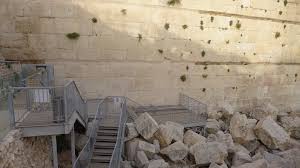
The context matters. The bill was triggered not by any new transgression but by a ruling of Israel’s High Court of Justice on 19 February, ordering the government to proceed with long-promised infrastructure upgrades to the Ezrat Yisrael plaza, improvements committed to under the 2016 Kotel Agreement, negotiated over three and a half years between the Israeli government, the Chief Rabbinate, and representatives of the Reform, Conservative, and Masorti movements worldwide. That agreement was subsequently frozen by Netanyahu’s government in June 2017 under Haredi political pressure. For nearly a decade, non-Orthodox Jews have prayed in a neglected, underdeveloped space, a concession for which they received nothing in return. Now, when Israel’s Supreme Court orders the state to honour its commitments, the legislative response is to threaten those worshippers with imprisonment.
Prime Minister Netanyahu withdrew the bill from the Ministerial Committee for Legislation, thereby avoiding formal coalition endorsement, but permitted members of Likud and the wider coalition a free vote. Fifty-six chose to support it.
Why is this not merely a political dispute, best left to Israeli domestic affairs? Because k’lal Yisrael, the covenant community of the Jewish people in its entirety, is not a political concept. It is a theological one, it reaches the very essence of Jewishness.
Outside Israel, the overwhelming majority of affiliated Jews worship in egalitarian communities. In North America alone, that figure stands at approximately 85 per cent. In the United Kingdom, in France, in Australia, in every major Diaspora community, the Progressive, Reform, Masorti, and Liberal movements represent the lived Jewish experience of millions. The bill now advancing through the Knesset would tell each of these Jews, explicitly and in law, that their form of prayer is a desecration of Judaism’s most sacred accessible site, and that were they to worship there according to their conscience and tradition, they would be treated as criminals by the Jewish state.
Anna Kislanski, Chief Executive of the Israel Movement for Reform and Progressive Judaism, stated it with precision: if any other country were to propose imprisoning Jews for praying according to their tradition, Israel would denounce it as antisemitism. The standard Israel applies abroad must apply at home.
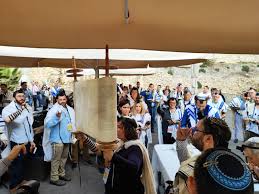
The danger, moreover, extends far beyond the Kotel itself. This bill is not an isolated measure. If codified, it sets a precedent: that the State of Israel may determine which forms of Jewish life are legitimate and which are criminal. It could embolden efforts to restrict recognition of non-Orthodox conversions, conversions which already hang by a thread in Israeli law, to limit public funding for pluralistic institutions, and to extend Rabbinate jurisdiction into areas of Israeli civil life that have, until now, retained some degree of pluralism.
At the moment when world Jewry faces rising antisemitism, when the Jewish people needs every expression of solidarity and unity it can muster, the State of Israel is considering legislating a rupture between itself and the majority of Jews on earth.
It is not coincidental that this legislation came before us precisely on Shabbat Zachor. The Torah we read this Shabbat speaks directly to what is happening now.
This is Shabbat Zachor, the Shabbat of Remembrance, the Shabbat before Purim, when we read the command “Zachor et asher asah lecha Amalek”, “Remember what Amalek did to you” (Deuteronomy 25:17). The rabbinic tradition identifies Amalek’s defining wickedness not only as military aggression but as the targeting of those described as “kol hanecheshalim acharecha”, “all the weakest who lagged behind you” (Deuteronomy 25:18), those at the margins, those who did not conform to the dominant formation, those whom the community had, however inadvertently, left exposed.
Zachor does not point only backward. It is an ongoing warning about a recurring temptation within every human community, including our own: the temptation to define authenticity through exclusion, to designate some members of the people as less than fully Jewish, their prayer as less than fully sacred, and their presence at the Wall as a desecration rather than a devotion.
The ner tamid of Tetzaveh and the zachor of this Shabbat speak with a single voice. The eternal light is sustained by all of b’nei Yisrael. When we allow any portion of our people to be cut off, from the Wall, from recognition, from the protection of the state that exists in their name, we do not protect the flame. We diminish it.
May those with the power to prevent this legislation find the courage to do so. And may we, as a Progressive community, continue to hold the light for every Jew, regardless of where or how they pray.
Shabbat Shalom.