Maidenhead Synagogue
7 November 2025 / 17 Cheshvan 5786
Abraham’s tent is often described as a model of religious life for progressive Jews, a tent of inclusivity. It is an inviting image, but it raises two serious questions. First: inclusion into what? Second: if everyone and everything is inside, does the tent itself still exist?
The metaphor of a tent in our Torah begins with a specific place:
“The Eternal appeared to him by the oaks of Mamre; he was sitting at the entrance of the tent” (Genesis 18:1).
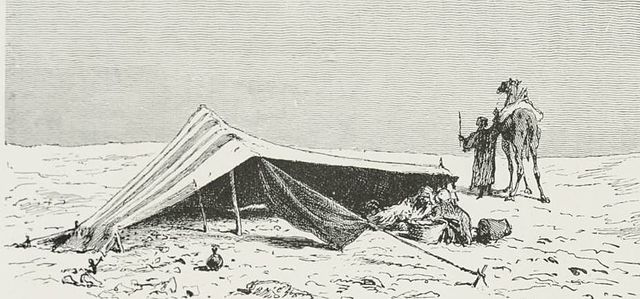
Abraham sits at the opening in the heat of the day. The tent is open, but it is still a tent: it has a shape, a fabric, a people, and a story. Abraham’s hospitality flows from who he is and who he is. A home with no walls is not a home; it is just open space.
Our community, as a space, is also a tent in that sense. When we spend Shabbat together, it is not a vague spiritual hour; it is a particular doorway. The prayers, the melodies, the Hebrew, the stories we tell, and the blessings over wine and bread: these are not decorative extras. They are the fabric of the tent. When we welcome, we do not welcome people into nothing. We welcome them into the life of our tradition, the warmth of our shared history.
Immediately after the scene of Abraham’s open tent, the Torah moves towards a darker landscape. It leads us to Sodom. The Midrash says, “the men of Sodom appointed over themselves judges who were lying judges, and they oppressed every wayfarer and stranger who entered Sodom with their perverse judgments” (Pirkei de-Rabbi Eliezer 25: 6). And the Talmud adds, “There was a young woman who would take out bread to the poor… They smeared her with honey, positioned her on a wall, and the hornets came and consumed her” (Sanhedrin 109b). Despite their wickedness, when God told Abraham about punishing them, Abraham argued with the Divine to save the cities of Sodom and Gomorrah. However, Abraham’s argument with God was not, “accept everyone no matter what they do.” He said, “Do not wipe away the innocent with the guilty; distinguish between ways of living, between those who do justice and those who crush the vulnerable” (Gen. 18:23–25). People are judged by their choices, as not all values are compatible with a just society.
For us, that means something quite concrete. Our tent must be open to people from all walks of life: those with strong Jewish roots, those with none, interfaith families, people who have been hurt by religion, and those who come with questions, anger, curiosity, or longing. At the same time, to ensure our welcome is honest, we must actively uphold certain core values and not remain neutral on them. We stand for human dignity, for justice, for compassion, for the safety of all who enter, for honest conversation, and for refusing racism, misogyny, homophobia, or any ideology that denies the image of God in another human being. A community that stands for nothing, or whose boundaries are so blurred that they are meaningless, cannot truly protect anyone. It is Sodom and Gomorrah all over again. We accept, welcome even, the one who questions, who doubts, the unsure one. But it must always be done in a spirit of respect.
This is what our tent is about. It has to be a place where you can belong even if your faith is fragile, where you can pray even if you are not sure to whom you are speaking, and where you can stand for justice even while your heart is tired and conflicted. The boundary is not there to exclude the honest struggler. It is there to hold a shape in which honest struggle is possible.
So, when we say we are a “tent of inclusivity”, let it mean this: We are a tent with fabric walls, not brick ones: walls that can move, stretch, and let light through; walls that shelter rather than imprison. We are rooted in Jewish practice, history, and responsibility. We do not apologise for having a particular story, language, and rhythm. We make room for doubt, anger, searching, and complexity. Belonging does not require a pre-determined theology. We are all seekers of meaning, open to the influence of other seekers, in respect and in love. We stay attentive to the voices at the edges. And we choose to sit, like Abraham, at the entrance of the tent, watching for those who approach, ready to rise, welcome, and offer food, blessings, and conversation. A community that knows who it is can truly open its tent.